Well I will sum it up for you.
There is some warming, and that's expected. But only if you just look at the very last few years (1000) and ignore almost all of the earths actual history.
Historically C02 has gradually fallen from almost 15 percent, down to almost nothing (less than a third of a tenth of a single percent today). Of which almost all of this is completely natural. And CO2 isn't even a big greenhouse gas compared to other gasses and water vapour.
There may or MAY not be SOME correlation between the global warming observed over the last few years, although it is not actually certain contrary to what many believe. It is based on a mass of computer models that ae incomplete. And these can show anything the programmer chooses based on miniscule input changes.
Although it may still be correct. Even so, if we accept this, and many non IPCC scientists do not, this appears significant only if you don't look back further than what amounts to the last 1 second, over a full year. And if you do that, it puts it into real perspective. And it becomes so insignificant that its invisible in the "noise".
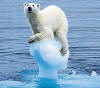
And we have had much more severe warming and CO2 levels, 100s of times worse, many times over in the past. And to way higher temperatures than predicted. And we still have polar bears... And the idea that warmer is bad for life or man is a false premise anyway... The opposite is easily shown to be correct. As it always was in the past.
At which point you have to ask, why worry about something insignificant, that is not controllable, and that may be a GOOD thing?
Global warming...
Re: Global warming...
 by Burgerman » 03 Jun 2014, 10:23
-

Burgerman - Site Admin
- Posts: 71086
- Joined: 27 May 2008, 21:24
- Location: United Kingdom
Re: Global warming...
by falco peregrinus » 03 Jun 2014, 14:09
At which point you have to ask, why worry about something insignificant, that is not controllable, and that may be a GOOD thing?
Some of that I agree with. The most important part, in fact. There's no point whatsoever worrying about it, because there is nothing that can be done about it. It's too late to halt it, or even slow it in time to avoid radical changes to the planet that will result in our kids and grandkids growing up in a vastly different world than what we grew up in. To my knowledge there is not a single government in the world committed to doing anything about it. So there's no point worrying about it. Nobody can change it, because changing it requires the cooperation of an enormous number of governments all around the world, and they've all made it quite clear that they have no intention of doing anything about it. They'd sooner adapt to the new conditions, rather than try to minimise the changes to the present conditions.
"Good" and "insignificant" are highly subjective terms that have different meanings for people with different values, so there isn't a lot of point disputing those. I don't consider it "good", because all life on this planet is adapted to the present climate, and the longer-lived the species, the longer that species needs to adapt to changes in the climate. Short-lived species like insects and small hyperactive mammals may be able to adapt to fast climate change, but long-lived species like cockatoos and elephants, and humans will have considerably more difficulty adapting and are more likely to become extinct than short-lived species. Trees are a serious concern, because they are responsible for the bulk of conversion of CO2 to O2 on this planet, but most species of trees are adapted to a specific temperature and moisture range, and abnormal continuation of either high or low temperature or high or low humidity levels outside the limited range to which they are adapted will kill them prematurely. For example, we had a bad bushfire in Victoria a few years ago which has wiped out huge expanses of high country eucalypts that have cloaked those mountains for probably tens of thousands of years. The drought that preceded that bushfire was so bad that the fire even managed to invade what is normally wet rainforest and damage it severely. Drought and bushfire are just part of life in Australia - it's normal - but in the last ten years we've been having VERY ABNORMAL droughts and very severe bushfires. And the experts say that climate change will produce more of that for Australia: more droughts, more severe droughts, more bushfires, more severe bushfires, more cyclones, more severe cyclones, more floods, more severe floods... And in the last twenty years we have indeed seen exactly that happening, particularly in the last ten years.
In the long term, from the planets point of view, it doesn't matter a damn. The violent weather is the planets way of compensating for the rising CO2 levels. Life will continue to exist on the planet, but the planet is about to go through yet another massive extinction, from which even greater biodiversity will result if the past is anything to go by. But in the short term, my kids and grandkids are going to experience things I would prefer that they did not have to experience.
Falco
-
falco peregrinus - Posts: 445
- Joined: 16 Sep 2013, 11:19
- Location: Brisbane, Australia
Re: Global warming...
by Burgerman » 03 Jun 2014, 17:15
Trees, animals and everything else has undergone MUCH bigger and FASTER changes in the past. And doesn't seem to much care. It just spreads north and south. And works better when warmer. We are surrounded by animals and trees that have gone through faster and more extreme changes many times over. Theres NOTHING we could do to stop warm periods, or ice ages, even if we were not even here. They all happened before us and will happen after us. No messing about with the tiny proportion of CO2 we add can make any serious difference.
And your grandkids will never feel or see any difference. Mabe in the next 50 to 1000 generations there may be some substantial changes, hotter or colder. But that's what the planed has always done.
And your grandkids will never feel or see any difference. Mabe in the next 50 to 1000 generations there may be some substantial changes, hotter or colder. But that's what the planed has always done.
-
Burgerman - Site Admin
- Posts: 71086
- Joined: 27 May 2008, 21:24
- Location: United Kingdom
Re: Global warming...
by falco peregrinus » 04 Jun 2014, 16:28
You don't acknowledge that tornados and cyclones are getting bigger and bigger and ever more destructive as time goes by? Or that floods are getting worse because more rain is falling in shorter time intervals compared to the not so distant past? Or that droughts are getting longer and more severe as time goes on?
If you haven't noticed these things, then I'll assume that it is because you're in England. Australia is a country where dramatic weather events are the norm - but over my life time, I have seen them get more and more dramatic. For example, just eight years ago we finally had a drought come to an end that was the worst in recorded history, both in magnitude across the country and in length. We had numerous towns run out of water in their water supply, including one very large one - actually a city, I suppose really - only a couple of hours from here. And where I live, which is the capital city of the second-largest state in the country, we came DAMNED close to running out of water. The only thing that saved us was an unpredicted switch from El Nino to La Nina, and it came only just in time to save a city of several million people running out of water.
The reason the phrase "climate change" is used is because global average temperature is just one very small weather factor that is changing in response to rising CO2 levels. The easiest way to capture the entire picture of worsening weather events is to call it "climate change", which indeed it is. And because of normal climate variability over the short term (ie, 10 or 20 years or more), it's difficult to separate the trend from the normal variations. But the trend is clearly there. But there will be years, or perhaps even decades, when the trend is difficult to find amongst the data, and there will be other years, or decades, when it is extremely easy to see.
The planet's climate is closely tied to the warm and cold ocean currents that encircle the planet. Change the flow or temperature of them, and there are consequences for world weather. Changing global temperature has dramatic effects upon some of those ocean currents.
In a nutshell, the planet's balance mechanism is this: rising CO2 levels raise ocean temperatures which raises humidity which causes more storms which dissolve the CO2 and forms carbonates to be locked away out of harms way. But when CO2 rises faster than the planet can deal with, you get a runaway effect. And the last information that I read on the runaway effect included the expectation that the Amazon rainforest would become subjected to temperatures and weather conditions beyond it's ability to cope with somewhere around 2050, at which point the rainforest would all die (if there's any of it still standing then, of course, not already cleared for farming or housing) and it would then, instead of being a carbon sink (ie, absorbing CO2 from the atmosphere), would suddenly become a huge carbon source and not just cease absorbing CO2 from the atmosphere, but release copious quantities more CO2 as it died and broke down. And at present the Amazon rainforest is by far the biggest carbon sink on the planet.
Like I have said before, all life on this planet (except perhaps humans) has evolved to cope with a certain "normal" climate. A certain "normal" temperature and humidity range, with a certain "normal" pattern of excessive or insufficient rain. The shorter-lived the species, the more quickly it can adapt to changes in climate. Trees are long-lived species that can not adapt, and can not move. As the climate becomes drier, or wetter, or hotter, or, in some parts of the world, colder, trees will find themselves outside their "comfort zone", if you like that way of expressing it, and they will die. (If they don't die in a bushfire after a severe drought first, like happened in our high country down south, when we permanently lost almost all of our high country eucalypt species.) When the trees die, CO2 levels in the atmosphere will rise even more quickly than before, and climate change will accelerate.
And very few species can move to find somewhere where their climate is similar to what they have adapted to, because mankind has cleared so much land that their habitats are islands, unconnected to any other potential habitat. So they die. So we get massive species extinctions worldwide, in a very short period of time (in evolutionary terms). City-man likes to think he doesn't need those species for his own survival, but truth is even the scientists working in those disciplines don't yet know just which species we depend upon for our own survival. Ecosystems are very complex things, and damaging any part of it invariably has unforeseen consequences.
I'm not at all thrilled about my kids routinely and frequently experiencing cyclones and droughts and floods of ever-increasing magnitude, or for that matter, even of the magnitude that I've seen become ever-more frequent during the last thirty years.
Oh, and by the way. polar bears are now a threatened species, due to the shrinking of the polar icecap. It is now quite common to see them obviously undernourished and starving, when in the past they would have been well-fed.
Falco
If you haven't noticed these things, then I'll assume that it is because you're in England. Australia is a country where dramatic weather events are the norm - but over my life time, I have seen them get more and more dramatic. For example, just eight years ago we finally had a drought come to an end that was the worst in recorded history, both in magnitude across the country and in length. We had numerous towns run out of water in their water supply, including one very large one - actually a city, I suppose really - only a couple of hours from here. And where I live, which is the capital city of the second-largest state in the country, we came DAMNED close to running out of water. The only thing that saved us was an unpredicted switch from El Nino to La Nina, and it came only just in time to save a city of several million people running out of water.
The reason the phrase "climate change" is used is because global average temperature is just one very small weather factor that is changing in response to rising CO2 levels. The easiest way to capture the entire picture of worsening weather events is to call it "climate change", which indeed it is. And because of normal climate variability over the short term (ie, 10 or 20 years or more), it's difficult to separate the trend from the normal variations. But the trend is clearly there. But there will be years, or perhaps even decades, when the trend is difficult to find amongst the data, and there will be other years, or decades, when it is extremely easy to see.
The planet's climate is closely tied to the warm and cold ocean currents that encircle the planet. Change the flow or temperature of them, and there are consequences for world weather. Changing global temperature has dramatic effects upon some of those ocean currents.
In a nutshell, the planet's balance mechanism is this: rising CO2 levels raise ocean temperatures which raises humidity which causes more storms which dissolve the CO2 and forms carbonates to be locked away out of harms way. But when CO2 rises faster than the planet can deal with, you get a runaway effect. And the last information that I read on the runaway effect included the expectation that the Amazon rainforest would become subjected to temperatures and weather conditions beyond it's ability to cope with somewhere around 2050, at which point the rainforest would all die (if there's any of it still standing then, of course, not already cleared for farming or housing) and it would then, instead of being a carbon sink (ie, absorbing CO2 from the atmosphere), would suddenly become a huge carbon source and not just cease absorbing CO2 from the atmosphere, but release copious quantities more CO2 as it died and broke down. And at present the Amazon rainforest is by far the biggest carbon sink on the planet.
Like I have said before, all life on this planet (except perhaps humans) has evolved to cope with a certain "normal" climate. A certain "normal" temperature and humidity range, with a certain "normal" pattern of excessive or insufficient rain. The shorter-lived the species, the more quickly it can adapt to changes in climate. Trees are long-lived species that can not adapt, and can not move. As the climate becomes drier, or wetter, or hotter, or, in some parts of the world, colder, trees will find themselves outside their "comfort zone", if you like that way of expressing it, and they will die. (If they don't die in a bushfire after a severe drought first, like happened in our high country down south, when we permanently lost almost all of our high country eucalypt species.) When the trees die, CO2 levels in the atmosphere will rise even more quickly than before, and climate change will accelerate.
And very few species can move to find somewhere where their climate is similar to what they have adapted to, because mankind has cleared so much land that their habitats are islands, unconnected to any other potential habitat. So they die. So we get massive species extinctions worldwide, in a very short period of time (in evolutionary terms). City-man likes to think he doesn't need those species for his own survival, but truth is even the scientists working in those disciplines don't yet know just which species we depend upon for our own survival. Ecosystems are very complex things, and damaging any part of it invariably has unforeseen consequences.
I'm not at all thrilled about my kids routinely and frequently experiencing cyclones and droughts and floods of ever-increasing magnitude, or for that matter, even of the magnitude that I've seen become ever-more frequent during the last thirty years.
Oh, and by the way. polar bears are now a threatened species, due to the shrinking of the polar icecap. It is now quite common to see them obviously undernourished and starving, when in the past they would have been well-fed.
Falco
-
falco peregrinus - Posts: 445
- Joined: 16 Sep 2013, 11:19
- Location: Brisbane, Australia
Re: Global warming...
by Burgerman » 04 Jun 2014, 22:20
ALL of the stuff in that post is perfectly normal. Its all happened, to much greater extremes and much faster in the past. You wont stop it, nobody can.
Trees die, others take over from other areas that are more suited. Evolution drives the ones that are not suited, to change. This stuff that's happening now is NOT unusual.
In fact its so insignificant in the scheme of things its not even measurable or visible on any LONGER TERM temp or weather or climate, or extinction or in fact any other kind of map. Unless you concentrate on what amounts to one second at the end of many years... Ignoring everything that naturally happens and has previously happened long before humans started driving cars. And burning fuel.
What HAS happened is that since then we all live a better, longer happier healthier easier life. With luxuries like living longer than 20 years old... No mass diseases wiping out whole areas. Almost no starvation, cold, or thirst forcing us to dink diseased water. Fuel, and industry feeds, heats, houses, everyone. And thinking that we should ignore all this in favour of a ridiculous scaremongering overpaid IPCC warmists which makes no sense if you REALLY look at things realistically (such as temperatures BEFORE the silly hockey stick) is crazy.
Trees die, others take over from other areas that are more suited. Evolution drives the ones that are not suited, to change. This stuff that's happening now is NOT unusual.
In fact its so insignificant in the scheme of things its not even measurable or visible on any LONGER TERM temp or weather or climate, or extinction or in fact any other kind of map. Unless you concentrate on what amounts to one second at the end of many years... Ignoring everything that naturally happens and has previously happened long before humans started driving cars. And burning fuel.
What HAS happened is that since then we all live a better, longer happier healthier easier life. With luxuries like living longer than 20 years old... No mass diseases wiping out whole areas. Almost no starvation, cold, or thirst forcing us to dink diseased water. Fuel, and industry feeds, heats, houses, everyone. And thinking that we should ignore all this in favour of a ridiculous scaremongering overpaid IPCC warmists which makes no sense if you REALLY look at things realistically (such as temperatures BEFORE the silly hockey stick) is crazy.
-
Burgerman - Site Admin
- Posts: 71086
- Joined: 27 May 2008, 21:24
- Location: United Kingdom
Re: Global warming...
by Burgerman » 07 Jul 2014, 13:09
Motorcycles are cuddly and save the planet no?
http://www.youtube.com/watch?v=h2EjXGJpLhg
Well some are!
Thank god for my favourite, the good old Turbocharged Suzuki's. They help keep the ice ages away.
This ones got even more engine power than mine did.
220+mph accidental power wheelies on the public highway? We need more of these!
http://www.youtube.com/watch?v=h2EjXGJpLhg
Well some are!
Thank god for my favourite, the good old Turbocharged Suzuki's. They help keep the ice ages away.
This ones got even more engine power than mine did.
220+mph accidental power wheelies on the public highway? We need more of these!
-
Burgerman - Site Admin
- Posts: 71086
- Joined: 27 May 2008, 21:24
- Location: United Kingdom
Re: Global warming...
by Lord Chatterley » 07 Jul 2014, 23:13
I LOVE FOSSIL FUELS!
It's the hypocrisy that gets me 6.00secs..
http://www.youtube.com/watch?v=XFIB1LsDpbk

Don't worry about the climate - it will be fine.
LC
It's the hypocrisy that gets me 6.00secs..
http://www.youtube.com/watch?v=XFIB1LsDpbk
Don't worry about the climate - it will be fine.
LC
- Lord Chatterley
- Posts: 2915
- Joined: 06 Jan 2010, 13:12
Re: Global warming...
by Lord Chatterley » 22 Aug 2014, 15:31
Only 10 days left to buy a 1600+w vacuum cleaner before they overheat the planet!! 
http://www.bbc.co.uk/news/business-28878432
This is a good radio interview with Marc Morano of the forthcoming Climate Hustle movie on the homicidal origins of the anti-industrial movement.
http://industrialprogress.com/wp-content/uploads/2014/08/Power-Hour-96.mp3
LC
http://www.bbc.co.uk/news/business-28878432
This is a good radio interview with Marc Morano of the forthcoming Climate Hustle movie on the homicidal origins of the anti-industrial movement.
http://industrialprogress.com/wp-content/uploads/2014/08/Power-Hour-96.mp3
LC
- Lord Chatterley
- Posts: 2915
- Joined: 06 Jan 2010, 13:12
Re: Global warming...
by Mark » 22 Aug 2014, 16:26
If you use a lower powered vacuum cleaner which takes longer to clean each room, how has that reduced the house's energy consumption? What an earth is between the ears of these meddling European autocrats? I believe all they do is waste money (our taxes) and reduce consumer choice.
My wife and I wish to leave the EEC, although we realise that this would remove the European Gravy Train from the reach of our mainstream politicians.
Free-trade agreements - fine by me. Political and pointless legislation and meddling - no thanks!
My wife and I wish to leave the EEC, although we realise that this would remove the European Gravy Train from the reach of our mainstream politicians.
Free-trade agreements - fine by me. Political and pointless legislation and meddling - no thanks!
- Mark
- Posts: 245
- Joined: 07 Aug 2014, 18:42
- Location: Derby, East Midlands, United Kingdom
Re: Global warming...
by Irving » 24 Aug 2014, 12:46
While I agree in general with your sentiments re meddling, there's an argument for some degree of doing so and that such legislation drives innovation... look at the clean air acts and low emission zones in Europe and elsewhere and how car manufacturers have implemented lower emission, higher efficiency, small-volume turbo-diesels to meet those requirements. Would they have done so if not for 'meddling'?
I'm not sure the above statement is necessarily true or proven. Dyson's are all <1600W and are far more efficient than many larger cleaners.
Mark wrote:If you use a lower powered vacuum cleaner which takes longer to clean each room, how has that reduced the house's energy consumption?
I'm not sure the above statement is necessarily true or proven. Dyson's are all <1600W and are far more efficient than many larger cleaners.
-

Irving - Posts: 2114
- Joined: 04 Dec 2012, 11:51
- Location: NW London
Re: Global warming...
by Burgerman » 24 Aug 2014, 14:13
While I agree in general with your sentiments re meddling, there's an argument for some degree of doing so and that such legislation drives innovation... look at the clean air acts and low emission zones in Europe and elsewhere and how car manufacturers have implemented lower emission, higher efficiency, small-volume turbo-diesels to meet those requirements. Would they have done so if not for 'meddling'?
They are measured at
a) idle (where they are burning least fuel, and producing about 1 percent of any waste.)
b) at a fixed "cruise" rpm. Where they are not under any load and not propelling a car.
At every other throttle position or rpm, or load, the emissions are not measured and are always far higher. Its easy to map an engine to be cuddly and polar bear friendly at the 2 points where its measured, and be grotesquely polluting at all other points on the 3D fuel/boost/ignition map where it actually gets driven. What's more most are exactly like that.
Bikes for eg, have all kinds of trickery in the fuelling, ignition etc. The old Suzuki's for eg had a pink wire connecting the ignition/fuel map to the gearbox to reduce power, emissions, and noise on an EEC drive past test at WOT in 3rd Gear. As soon as any mechanic or owner gets hold of it they disconnect this so it runs properly... The car industry do all the same tricks.
Vaccum cleaners are a bit different. They are sold to the ignorant public like drills are. The more "watts" the better and more powerful it is... My 2000 watt vacuum cleaner says 150 Air watts! That makes it just 7.5 percent efficient!
-
Burgerman - Site Admin
- Posts: 71086
- Joined: 27 May 2008, 21:24
- Location: United Kingdom
Re: Global warming...
by Mark » 24 Aug 2014, 18:25
Irving wrote:Mark wrote:If you use a lower powered vacuum cleaner which takes longer to clean each room, how has that reduced the house's energy consumption?
I'm not sure the above statement is necessarily true or proven. Dyson's are all <1600W and are far more efficient than many larger cleaners.
That is a good point Irving, but they are not legislating for efficiency, which might have some merit, they are just picking a motor wattage. Indeed other EEC legislation actually results in increased energy wastage. Hence my opinion that it is muddled meddling.
- Mark
- Posts: 245
- Joined: 07 Aug 2014, 18:42
- Location: Derby, East Midlands, United Kingdom
Re: Global warming...
by Irving » 25 Aug 2014, 19:24
Yes Mark & BM, I guess I was being a little optimistic. Of course MOST manufacturers will work to the letter of the legislation not the spirit intended. The meddling is well meaning but ultimately flawed; I guess because often its the manufacturer's experts that draft it....
-
Irving - Posts: 2114
- Joined: 04 Dec 2012, 11:51
- Location: NW London
Re: Global warming...
by Lord Chatterley » 25 Aug 2014, 23:16
Irving wrote:While I agree in general with your sentiments re meddling, there's an argument for some degree of doing so and that such legislation drives innovation... look at the clean air acts and low emission zones in Europe and elsewhere and how car manufacturers have implemented lower emission, higher efficiency, small-volume turbo-diesels to meet those requirements. Would they have done so if not for 'meddling'?
Yes.
LC
- Lord Chatterley
- Posts: 2915
- Joined: 06 Jan 2010, 13:12
Re: Global warming...
by Lord Chatterley » 23 Sep 2014, 18:10
Huge demonstrations by climate stasists gets some real-time feedback - e.g. "your anti-fossil fuel banner is made from fossil fuels," from Alex Epstein - quite amusing, really... 
https://www.youtube.com/watch?v=mojiBJ55G2g&list=UUYi3PK144qrY_YGWFyAbK1A&index=4
https://www.youtube.com/watch?v=bcgH62jiocA&list=UUYi3PK144qrY_YGWFyAbK1A&index=3
https://www.youtube.com/watch?v=ZVBNelw4yks&list=UUYi3PK144qrY_YGWFyAbK1A
https://www.youtube.com/watch?v=hz2HVN_iLKM&list=UUYi3PK144qrY_YGWFyAbK1A
LC
https://www.youtube.com/watch?v=mojiBJ55G2g&list=UUYi3PK144qrY_YGWFyAbK1A&index=4
https://www.youtube.com/watch?v=bcgH62jiocA&list=UUYi3PK144qrY_YGWFyAbK1A&index=3
https://www.youtube.com/watch?v=ZVBNelw4yks&list=UUYi3PK144qrY_YGWFyAbK1A
https://www.youtube.com/watch?v=hz2HVN_iLKM&list=UUYi3PK144qrY_YGWFyAbK1A
LC
- Lord Chatterley
- Posts: 2915
- Joined: 06 Jan 2010, 13:12
Re: Global warming...
by Burgerman » 23 Sep 2014, 23:50
ALL of those are funny, in a sad way. He is correct. But just like religion the masses do not get it, and have been brainwashed.
Here is the real facts about warming. Natural warming. www.wheelchairdriver.com/warming.pdf
But the "masses" in the US are still in the minority. In the UK and all over Europe they arte now the majority. Just like religion. And its all Maggie thatcher's fault.
Here is the real facts about warming. Natural warming. www.wheelchairdriver.com/warming.pdf
But the "masses" in the US are still in the minority. In the UK and all over Europe they arte now the majority. Just like religion. And its all Maggie thatcher's fault.
-
Burgerman - Site Admin
- Posts: 71086
- Joined: 27 May 2008, 21:24
- Location: United Kingdom
Re: Global warming...
by motoman » 24 Sep 2014, 01:52
Lord Chatterley wrote:- e.g. "your anti-fossil fuel banner is made from fossil fuels," from Alex Epstein - quite amusing, really...
Not to mention almost everybody has a backpack on....all made from oil. As was their shoes, clothes ect. And all of it brought to market by oil powered ships and diesel burning trucks.
- motoman
- Posts: 297
- Joined: 28 Feb 2012, 02:18
- Location: Wisconsin USA
Re: Global warming...
by Burgerman » 24 Sep 2014, 10:00
Along with almost every part of that city and its infrastructure, including the roads they are standing on.
And the very reason he is not dead by 30 (or never born) to begin with. We wont mention the masses of fuel that it takes to do intensive industrialised food production, shipping, refrigeration, and cooking...
Or the oil burning busses and trains or cars they all used to get there!
And they all offer no alternative.
And then there's this!
www.wheelchairdriver.com/warming.pdf Which puts the claimed warming into some real perspective.
And the very reason he is not dead by 30 (or never born) to begin with. We wont mention the masses of fuel that it takes to do intensive industrialised food production, shipping, refrigeration, and cooking...
Or the oil burning busses and trains or cars they all used to get there!
And they all offer no alternative.
And then there's this!
www.wheelchairdriver.com/warming.pdf Which puts the claimed warming into some real perspective.
-
Burgerman - Site Admin
- Posts: 71086
- Joined: 27 May 2008, 21:24
- Location: United Kingdom
Re: Global warming...
by Lord Chatterley » 24 Sep 2014, 16:55

- Lord Chatterley
- Posts: 2915
- Joined: 06 Jan 2010, 13:12
Re: Global warming...
by Burgerman » 24 Sep 2014, 17:15
Toyota Prius and an electric car
Leonardo bought this above to save the planet.
A Prius does LESS MPG on an average day than a Diesel VW golf. As tested by TopGear.
And requires extra manufacturing of polluting lithium batteries, and extra electronics to boot.
Electric cars suffer the same pollution issues are charged via 35 percent efficient COAL power stations...
-
Burgerman - Site Admin
- Posts: 71086
- Joined: 27 May 2008, 21:24
- Location: United Kingdom
Re: Global warming...
by Sully » 26 Sep 2014, 19:46
The alternative is to move to higher ground, buy more bikinis, enjoy the pretty much hurricane free Atlantic, til more farm land in Greenland.
For prevention to have worked, it would have had to start at least a hundred years ago. And don't forget to plug all the volcanoes cover the methane bubbling lakes in the arctic, as well as along the American Atlantic Coast and use the gas, the un-burned methane is 17 times more heat capturing than it is when it is burned.
Hey I'll be dead before this becomes critical why should I worry about it? My kids will have waterfront property.
For prevention to have worked, it would have had to start at least a hundred years ago. And don't forget to plug all the volcanoes cover the methane bubbling lakes in the arctic, as well as along the American Atlantic Coast and use the gas, the un-burned methane is 17 times more heat capturing than it is when it is burned.
Hey I'll be dead before this becomes critical why should I worry about it? My kids will have waterfront property.
- Sully
- Posts: 2223
- Joined: 04 Dec 2010, 18:44
- Location: Hampstead, North Carolina, USA
Re: Global warming...
by Lord Chatterley » 27 Sep 2014, 15:40
The sheer dishonesty of the Climate Stasists is revealed here:
Cook, Mann and many of the other members of ‘the team’ are wilfully deceptive. They should have been laughed off the stage, not applauded. I’m not willing to accept the ‘Noble cause corruption’ narrative and neither, it seems, are some others. This isn’t just individual failure, it’s institutional. And that’s where it really sticks in the craw for me. And it drives much of my anger, as well as that of the people who I have successfully introduced to climate scepticism/realism...
When I am introducing someone to the sceptical range of views an exercise I often use is to give them a link to the IPCC WG1 report (now AR5, previously I linked them to AR4). I then invite them to pick three chapters at random – any three whatsoever (other than the Summary for Policymakers (SPM)) – and skim them (or read them in full if they have the time) and come back to me with their impressions. I experience the same response every time and indeed, it matches my own. Reading the report’s individual chapters (sans the SPM), one comes away with the impression of a scholarly, ponderous document. Lots of caveats, uncertainties, doubts, gaps and so on are clearly articulated. In short, it is what one generally expects from academic output. Then the anger flows in. It is a painfully sharp contrast to the mainstream narratives. Within those there’s disaster lurking at any moment, around every corner. It’s always ‘worse than we thought’. The climate science establishment are unanimous in agreeing that thermageddon is imminent – they’re 95% certain, in fact! About every aspect of the topic!
Read the whole thing here:
http://bishophill.squarespace.com/blog/2014/9/26/watts-up-with-mann.html
LC
Cook, Mann and many of the other members of ‘the team’ are wilfully deceptive. They should have been laughed off the stage, not applauded. I’m not willing to accept the ‘Noble cause corruption’ narrative and neither, it seems, are some others. This isn’t just individual failure, it’s institutional. And that’s where it really sticks in the craw for me. And it drives much of my anger, as well as that of the people who I have successfully introduced to climate scepticism/realism...
When I am introducing someone to the sceptical range of views an exercise I often use is to give them a link to the IPCC WG1 report (now AR5, previously I linked them to AR4). I then invite them to pick three chapters at random – any three whatsoever (other than the Summary for Policymakers (SPM)) – and skim them (or read them in full if they have the time) and come back to me with their impressions. I experience the same response every time and indeed, it matches my own. Reading the report’s individual chapters (sans the SPM), one comes away with the impression of a scholarly, ponderous document. Lots of caveats, uncertainties, doubts, gaps and so on are clearly articulated. In short, it is what one generally expects from academic output. Then the anger flows in. It is a painfully sharp contrast to the mainstream narratives. Within those there’s disaster lurking at any moment, around every corner. It’s always ‘worse than we thought’. The climate science establishment are unanimous in agreeing that thermageddon is imminent – they’re 95% certain, in fact! About every aspect of the topic!
Read the whole thing here:
http://bishophill.squarespace.com/blog/2014/9/26/watts-up-with-mann.html
LC
- Lord Chatterley
- Posts: 2915
- Joined: 06 Jan 2010, 13:12
Re: Global warming...
by s7even » 27 Sep 2014, 15:55
1. Obviously it's just a natural climate cycle.
2. Fossil fuels are finite and that's really what it's about.
I think it's all about power, money, and control. It's a distraction but technically everything humans talk about is.
2. Fossil fuels are finite and that's really what it's about.
I think it's all about power, money, and control. It's a distraction but technically everything humans talk about is.
-

s7even - Posts: 23
- Joined: 22 Sep 2014, 17:39
- Location: Portsmouth, England
Re: Global warming...
by Lord Chatterley » 27 Sep 2014, 16:38
I vividly remember Milton Friedman on the BBC's flagship programme Question Time in 1979 telling the audience that - contrary to all the world's experts - fossil fuels would not run out by 2004 - there was almost a riot.
This is 1978 where he quotes Jevons who was a better economist than anyone in any government today [Jevons understood Marginalism indeed he was the first person to define it!]
https://www.youtube.com/watch?v=WjdJH-KrxKE
LC
This is 1978 where he quotes Jevons who was a better economist than anyone in any government today [Jevons understood Marginalism indeed he was the first person to define it!]
https://www.youtube.com/watch?v=WjdJH-KrxKE
LC
- Lord Chatterley
- Posts: 2915
- Joined: 06 Jan 2010, 13:12
Re: Global warming...
by Burgerman » 27 Sep 2014, 17:10
1. Obviously it's just a natural climate cycle.
2. Fossil fuels are finite and that's really what it's about.
I think it's all about power, money, and control. It's a distraction but technically everything humans talk about is.
And only when the cost of it gets high enough to extract and to buy because of scarcity will anyone really look for or pay more for the alternatives like nuclear, wind, solar, etc.
1. Obviously it's just a natural climate cycle.
www.wheelchairdriver.com/warming.pdf
-
Burgerman - Site Admin
- Posts: 71086
- Joined: 27 May 2008, 21:24
- Location: United Kingdom
Re: Global warming...
by Lord Chatterley » 27 Sep 2014, 18:13
s7even wrote:Isn't friedman saying jevons was wrong?
Yes, and the point is this, as Frieman says - Jevons was no mug, he was one of the greatest economists of the whole Victorian era!
We haven't even bothered looking for fossil fuels except in a few convenient locations - there's no need.
LC
- Lord Chatterley
- Posts: 2915
- Joined: 06 Jan 2010, 13:12
Re: Global warming...
by s7even » 27 Sep 2014, 21:55
Yeah it may not be running out anytime soon it's just a finite resource. As finite as every resource on the planet. Finite doesn't mean limited it just means not unlimited. There could be 1,000,000,000,000,000 years worth of fossil fuel (depending how much is used per year) probably there is 10,000 years worth if we continue using it at this rate of increase. Why aren't they figuring this out somehow?
-
s7even - Posts: 23
- Joined: 22 Sep 2014, 17:39
- Location: Portsmouth, England
Re: Global warming...
by Burgerman » 28 Sep 2014, 00:43
It will never run out as such, but will become more expensive bit by bit as more and more needs to be found, and extracted from more difficult places.
As such simple economics will mean less and less is used over time, and more and more other methods will be adopted.
Its already happening. I have 2.5kw DIY solar system, which drastically subsidises my power bill. So I am using less (expensive) coal.
See here http://www.wheelchairdriver.com/solar-p ... riment.htm DIY
As such simple economics will mean less and less is used over time, and more and more other methods will be adopted.
Its already happening. I have 2.5kw DIY solar system, which drastically subsidises my power bill. So I am using less (expensive) coal.
See here http://www.wheelchairdriver.com/solar-p ... riment.htm DIY
-
Burgerman - Site Admin
- Posts: 71086
- Joined: 27 May 2008, 21:24
- Location: United Kingdom
Re: Global warming...
by s7even » 28 Sep 2014, 01:35
Prices increase because wages increase. The stock market f'd up the whole supply/demand thing. Now it's all about what the media makes tom, dick, and harry think. Not what is actually available/wanted.
Anything the Main Stream Media says is probably not entirely true. It's always because someone rich has an agenda. Until Rupert Murdoch has stocks in renewable energy companies Fox news will continue to deny humans are affecting global warming. Which they are. However, like the studies you link to say, it's a negligible amount.
Anything the Main Stream Media says is probably not entirely true. It's always because someone rich has an agenda. Until Rupert Murdoch has stocks in renewable energy companies Fox news will continue to deny humans are affecting global warming. Which they are. However, like the studies you link to say, it's a negligible amount.
-
s7even - Posts: 23
- Joined: 22 Sep 2014, 17:39
- Location: Portsmouth, England
Who is online
Users browsing this forum: No registered users and 35 guests
